Co-sponsored and/or Affiliate Events
Professor Emerit Laurie Beth Clark curates show: HOW WE GOT IT TOGETHER.
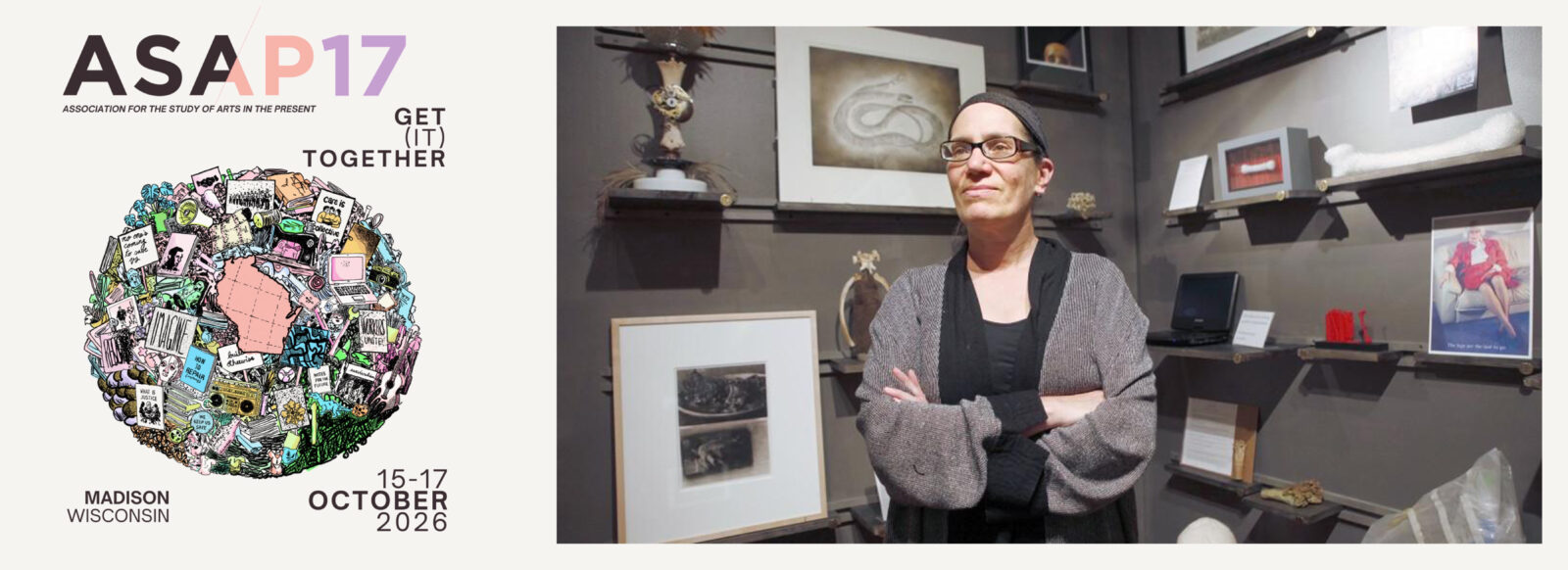
HOW WE GOT IT TOGETHER coincides with the annual conference of the Association for the Study of Arts of the Present (ASAP) and features the work of more than one hundred University of Wisconsin alumns on whose graduate committees Clark has served in the past forty years. You can see the show between 12 and 18 October in Gallery Seven (Mosse Humanities Building) and Art Lofts Gallery and Backspace Gallery (both at 111 North Francis Street). A comprehensive catalog can be found at https://howwegotittogether.blog/
Looking Together with UW Special Collections: A Chat with Amanda Shubert, Alison Rollins, and Kristina Huang
October 21, 6:00-7:30, in Special Collections (Memorial Library 9th floor)
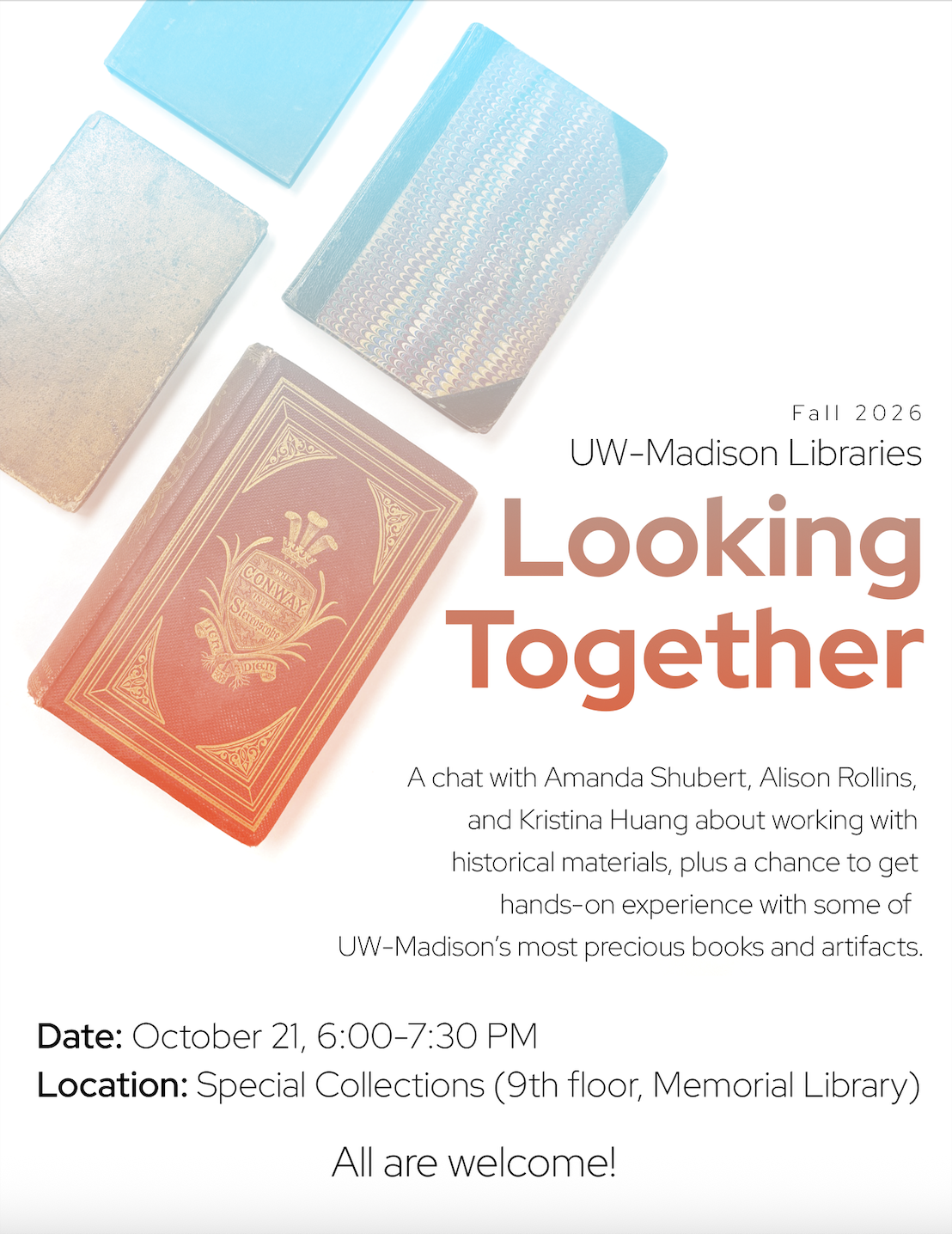
Three members of UW–Madison’s faculty will lead attendees through ~15 minute guided “looks” at items in our collections, informed by their research and creative practice, to help an audience of colleagues, librarians, and community members appreciate the material object in a new way. Audience members will then be invited to engage with and investigate the materials for themselves.
Speakers:
- Amanda Shubert will be talking about the stereographs in Special Collections. Amanda is the author of Seeing Things: Virtual Aesthetics in Victorian Culture.
- Alison Rollins will be speaking about her work in conversation with late 18th-19th century Black women writers. Alison is author of the poetry collections Black Bell and Library of Small Catastrophes.
- Kristina Huang will be speaking about the Letters of the Late Ignatius Sancho. Kristina is the co-editor of The Cambridge Companion to Ignatius Sancho.
Paul Dobryden presents Casting Weimar: Selection, Surplus, and the Film Actor
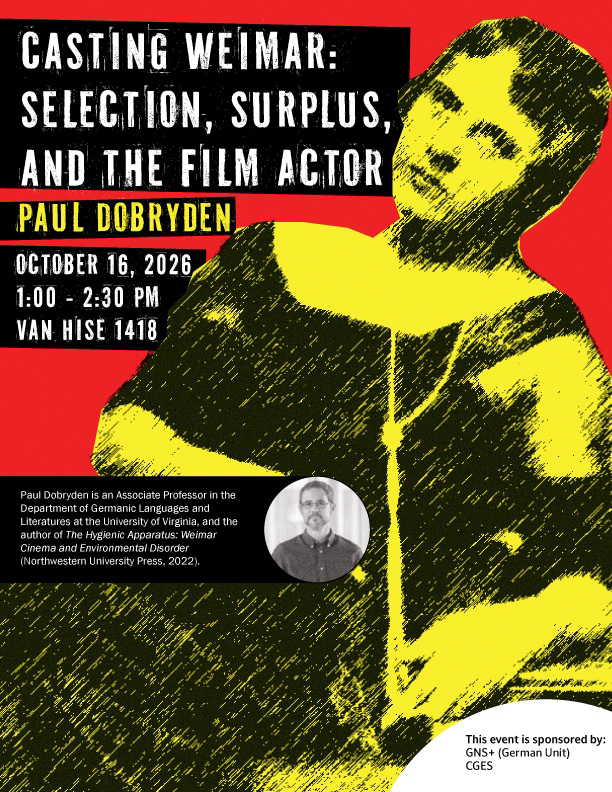
This presentation tracks modern discourses of human selection as they converged in discussions of film acting in Weimar Germany. In the early years of narrative cinema and beyond, the question of how to select actors for films—the question of casting, in other words—preoccupied filmmakers, actors, critics, and audiences. I trace this question to features of capitalist modernity that made selection a persistent and widespread concern during the Weimar period, and examine how film casting intersected with scientific management and eugenics, emerging disciplines that purported to provide rational criteria for sorting people in employment and marriage. I then turn to texts by Siegfried Kracauer and Walter Benjamin, who offer critical purchase on discourses of selection by foregrounding the category of surplus population and the politics of stardom.
Paul Dobryden is an Associate Professor in the Department of Germanic Languages and Literatures at the University of Virginia, and the author of The Hygienic Apparatus: Weimar Cinema and Environmental Disorder (Northwestern University Press, 2022).
Sponsored by German (GNS+) and CGES.
Past Affiliate Events
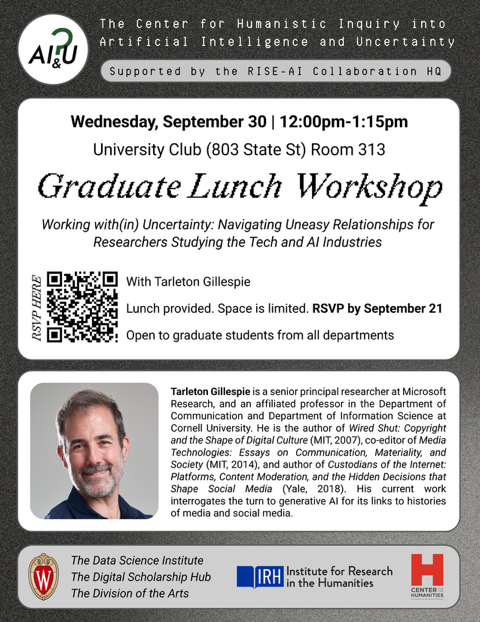
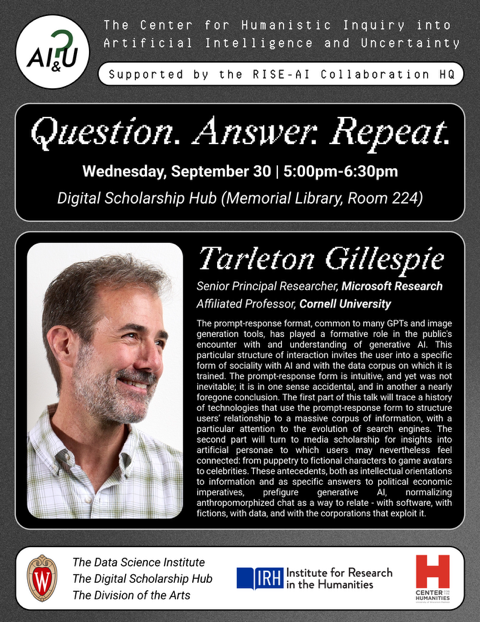
“The Center for Humanistic Inquiry into AI and Uncertainty (AI&U) is excited to host its first public event(s) of the year on Sep. 30th. We’re excited to welcome Tarleton Gillespie, a senior principal researcher at Microsoft Research, and an affiliated professor in the Department of Communication and Department of Information Science at Cornell University, for a Keynote Talk and a Graduate Student Lunch Seminar.
Dr. Gillespie’s keynote talk will discuss how delivering generative AI as a chatbot may be “the original sin” of this AI revolution. He’ll trace the prompt-response format back through search engines and media theory and the corporations that profit from making it feel like talking to a person. His graduate lunch seminar will discuss the tensions, challenges, and opportunities that researchers face when studying tech, media and computing industries.
Check out the info at our website.
Please note, the lunch seminar is RSVP only and solely for graduate students. It will have limited seating due to the room size.”